A construction roll-off is a metal open-top container you load yourself; it is not junk removal where a crew loads for you. Henry Dumpster Rental drops the can, you fill it with debris over the rental window, and the…
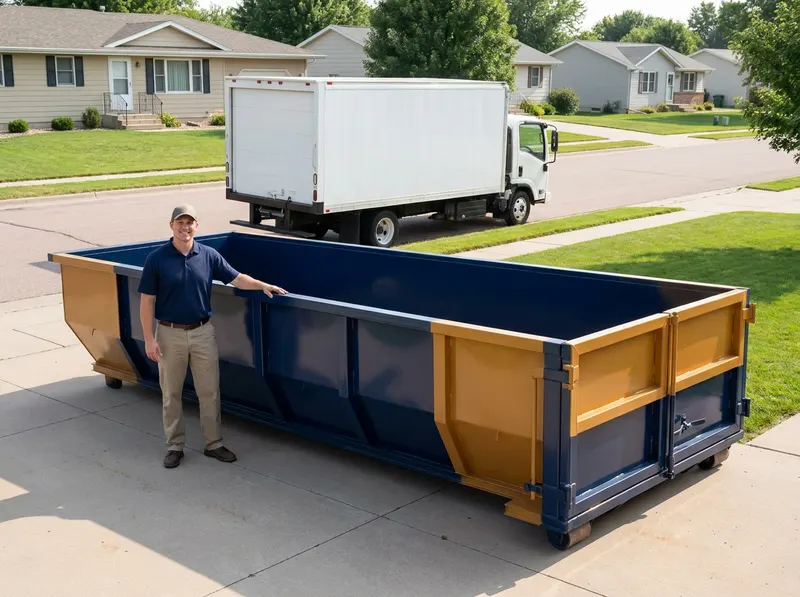
A construction roll-off is a metal open-top container you load yourself; it is not junk removal where a crew loads for you. Henry Dumpster Rental drops the can, you fill it with debris over the rental window, and the loaded box is hauled to the Minnehaha County transfer station. The five sizes cover the full jobsite range: the 10-yard $595 unit fits a single bathroom gut in a Cathedral Historic District bungalow, the 20-yard $695 unit handles a full kitchen-and-bath remodel, and the 30-yard $795 and 40-yard $895 boxes take a roof tear-off or a small commercial buildout in Prairie West or Willow Run. A 10-yard holds about four pickup-truck loads; a 40-yard holds about sixteen.
Sizing turns on weight, not just volume. Dense debris like concrete, brick, asphalt shingles, and dirt is heavy enough that a small can fills to its legal road limit long before it looks full, so a roof tear-off in All Saints or a foundation dig in Tuthill usually calls for a 10- or 15-yard box loaded low rather than a big can loaded high. Light bulky debris like framing lumber, cabinetry, and siding fills space fast without much weight, which is where the 30- and 40-yard sizes earn their keep on a Pettigrew Heights or Hayward remodel. The flat price is the same regardless of how the load stacks out, so there is no back-end tonnage surprise. The U.S. Environmental Protection Agency classifies most of this as construction and demolition debris, which is disposed separately from household trash.
Step 1: call (605) 250-8737 or text a photo of the jobsite and the debris. Step 2: our team reads the size against the material's weight and the approach. Step 3: the can is scheduled and dropped, with boards used to spread the load and protect a concrete driveway. Step 4: the crew fills it over the rental term. Step 5: the loaded roll-off is picked up and hauled for disposal. Contractors coordinating a phased build can swap a full can for an empty one to keep a Cherry Lake Addition or McKennan Park site clear.
A few loads change the picture. Prohibited materials keep a roll-off out of the transfer stream: no wet paint, solvents, or other household hazardous waste, no tires, no appliances holding refrigerant, and no items flagged under South Dakota rules by the Department of Agriculture and Natural Resources. Clean concrete and shingles are often kept in their own can so the load can be recycled through programs indexed at Earth911. On any active jobsite, container placement and loading follow OSHA construction standards for clear egress and safe stacking, and a can set in the public right-of-way on a street like those near the Washington Pavilion may need a placement permit from the City of Sioux Falls. Roofing tonnage is estimated using the National Roofing Contractors Association's shingle weight figures, and steel-container weight ratings trace to ASTM material standards. Waste-hauling practice for these containers is set out by the solid-waste industry, and larger commercial demo projects reference recovery targets from the federal buildings program.
Every job gets a firm, written price after an on-site visit.
Tell us about your construction & commercial roll-off job in Sioux Falls and we'll send a clear, written quote, usually the same day.
 Henry Dumpster Rental